


The AI model race is real, and it's not slowing down. Over the past two years, the frontier model rankings have flipped multiple times. Claude leads, then GPT takes it back, then Gemini closes the gap. The margin between first and second is measured in months, not years. As the person building the platform your team uses to run AI agents, I've spent a lot of time thinking about what this dynamic means for you and for the tools you depend on.
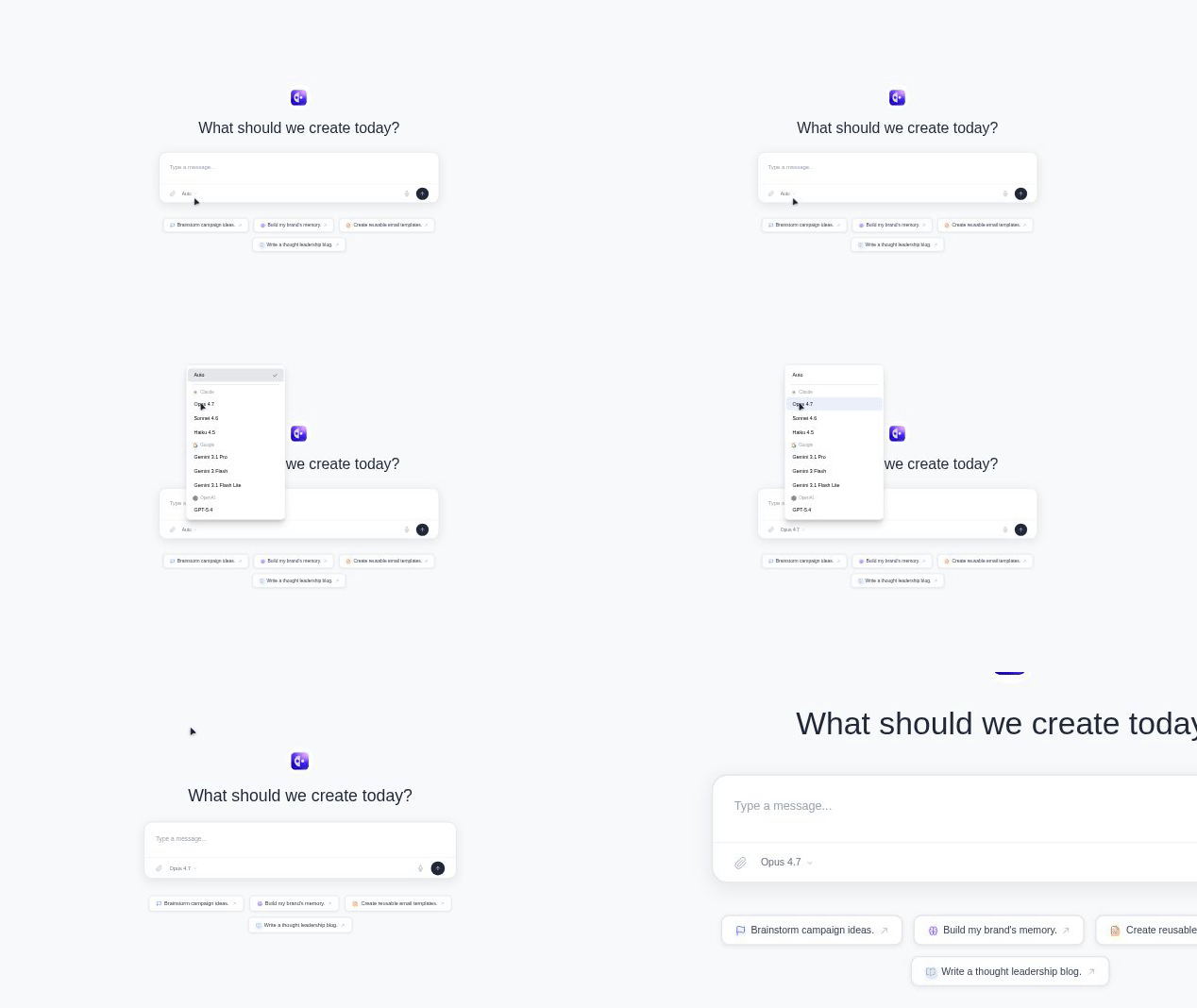
Starting today, Quotient supports multiple AI model providers. You can run your AI marketing agents on OpenAI's GPT-5.5, Google's Gemini 3.x, or Anthropic's Claude Opus 4.7, and switch between them from a model selector directly in your workspace settings. All three are current frontier models. They all perform at the cutting edge, and they each have different strengths depending on the task type.
The reason this matters comes down to one observation: the model that leads today probably won't be the leader in 90 days. The teams at Anthropic, OpenAI, and Google are all pushing hard. Releases are getting faster, not slower. The gaps between models are narrow enough that a single new release can reshuffle the rankings completely. If your AI platform is built on a single provider, you inherit whatever ceiling that model hits and wait until your vendor catches up before you can access the next leap forward.
Quotient was built to be model-agnostic from day one, because we believed this race was coming. When a new frontier model ships, Quotient users can switch to it. Not someday, not after our next release cycle, but as soon as we've evaluated it and confirmed it meets the bar. Our architecture routes to the best available model rather than being hard-coded to any single one. The goal is that you're always running on the best available model for your workflow, regardless of which company shipped it.
The alternative is single-model lock-in. When your AI tool is built on one provider's API, you inherit everything that comes with it: capacity constraints during high-demand periods, pricing changes at the model layer that flow directly through to your costs, and capability gaps that persist until your vendor gets around to updating. These aren't hypothetical risks. They're the normal operational reality of depending on one provider in a market moving this fast.
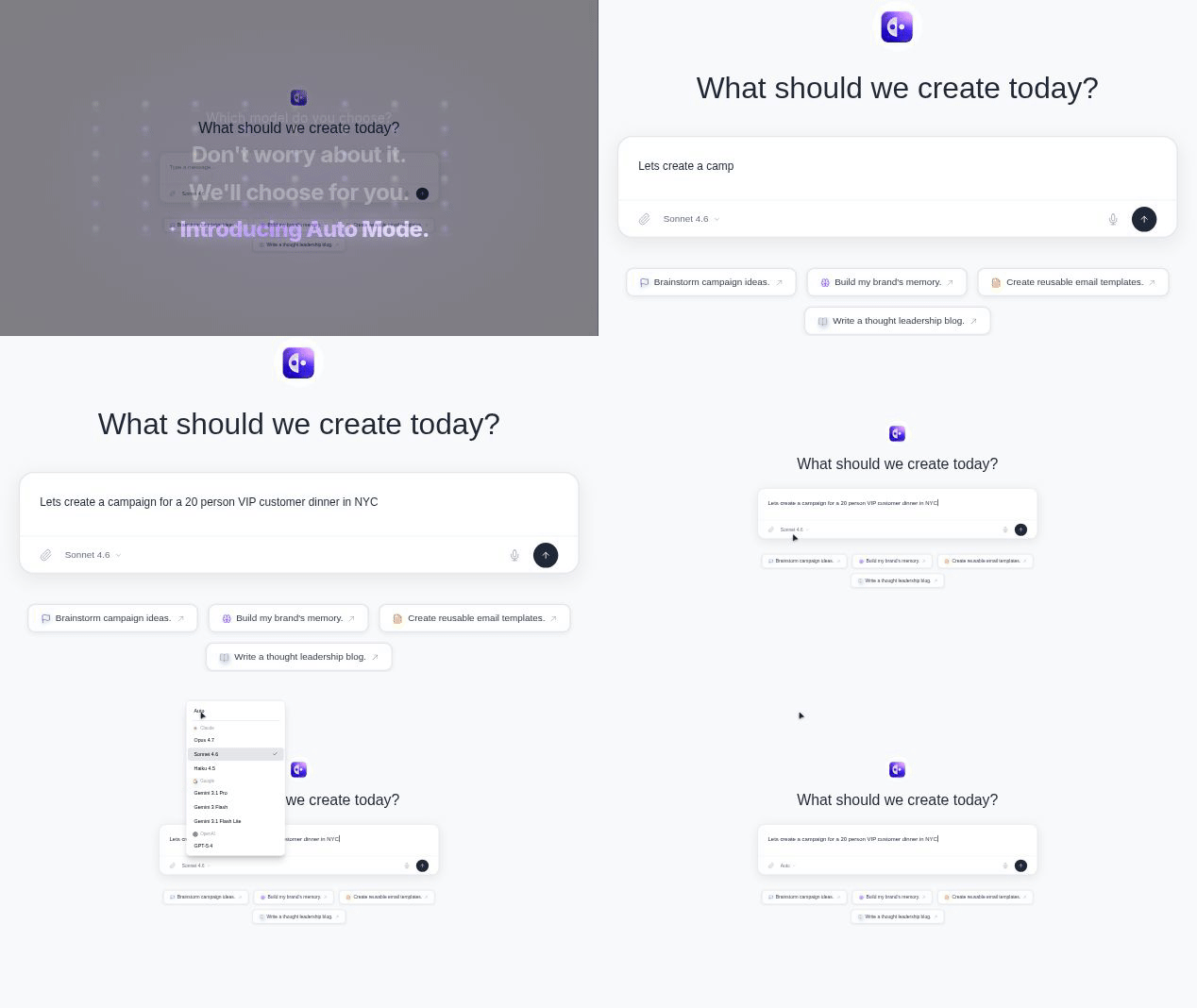
In practice, most teams will settle into a default model that fits their workflows best. Some will prefer GPT-5.5 for complex multi-step campaign tasks. Others will find Gemini 3.x better suited for certain content types. The model selector is there for when you want to experiment, test a new release against your existing setup, or optimize for a specific use case. We'll keep adding providers as the frontier evolves. The goal isn't a fixed list of three.
Quotient is your AI marketing team. We work with the best models in the world so your team always has access to the frontier. Multi-model support is live now — you can find the model selector in your workspace settings. We'd love to hear which model you end up preferring and why.
Blog
Keep up with the latest
from Quotient
Similar Topics